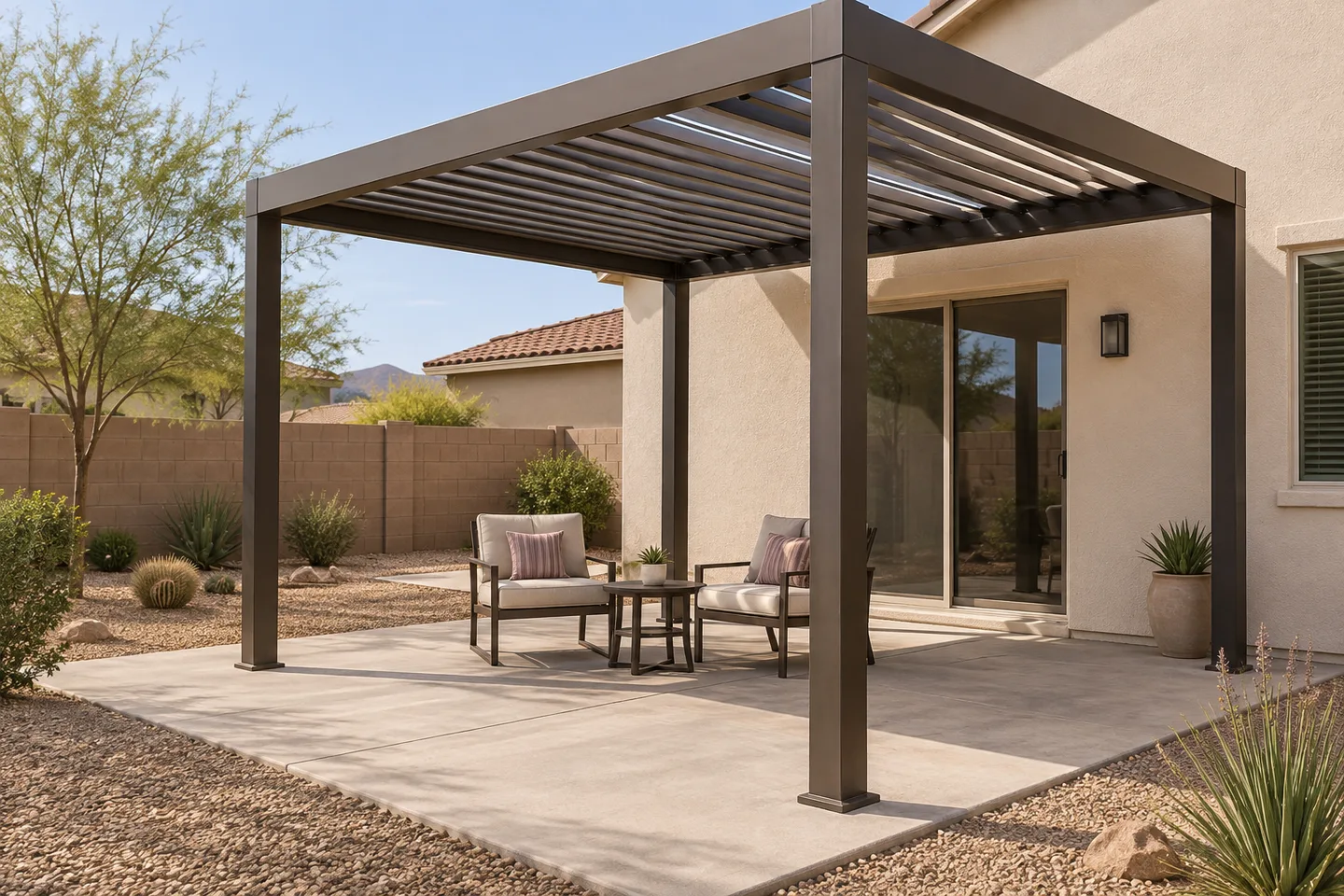
Start with the sun, then choose a structure
Spend a day noticing which seats are uncomfortable in the morning, at midday and in the late afternoon. Overhead shade and side shade solve different problems. In Farmington’s high-desert setting, keeping a view and airflow can matter just as much as blocking direct sun.
Backyard shade ideas worth comparing
A small, well-positioned structure may serve your daily routine better than covering every square foot.
- A freestanding roof over a separate dining or conversation area.
- A pergola with a suitable roof system where filtered shade is not enough.
- An aluminum pergola when material appearance and maintenance preferences are priorities.
- A retractable awning for adjustable overhead shade, subject to product operating limits.
- A shade wall or side screen for low-angle light.
Avoid creating a new problem
Consider how the new shade affects indoor daylight, doors, views and water runoff. Existing pergolas need review before adding a roof or heavier shade material. Wind exposure, anchoring and clearances are product- and site-specific; no shade system should be assumed suitable based on appearance.
Plan the practical details
Span, materials, foundations, mounting surfaces and adjustable mechanisms influence cost. Ask who will check local permit requirements, HOA restrictions and any structural documentation. Bring approximate dimensions and photos taken when the patio is most uncomfortable.